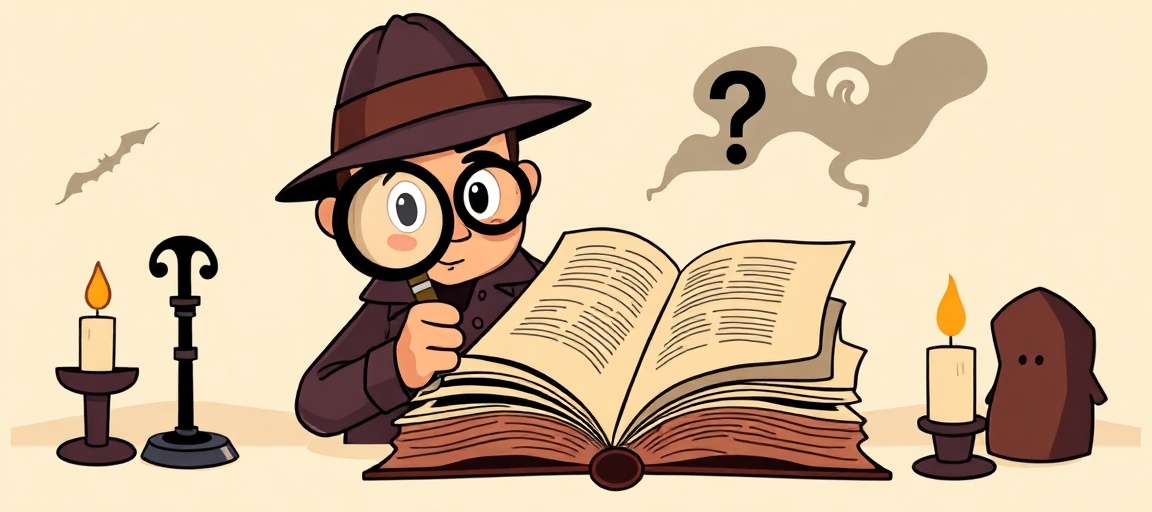
Storytale currently has five modes (Quick, Comedy, Classic, Visual, Solo) — all variations on the same comedy skeleton. The future is broader genres, each with their own mechanics. Murder Mystery is the first genuinely new genre we want to build.
The idea
At the start of a Murder Mystery game, each player secretly receives a role: detective, killer, witness, victim (the first to drop out), or a neutral bystander. Everyone knows their own role — not anyone else's.
The sentences you write then become charged: as the killer you try to cover tracks or plant false leads. As the detective you gather clues. As the witness you observe. At the end of the game, players guess who the killer is, and then comes the reveal.
What the AI does
The AI bridges blend the clues — sometimes hinting towards the killer, sometimes planting a red herring. For the ending, the AI writes a final paragraph that answers all the open questions based on the actual roles assigned.
Why this is different
Comedy lets everyone freely choose direction. Murder Mystery gives you a mission in every contribution. That makes it more of a role-playing experience, less free association. Not for every group — but for groups who love to play, a golden combination.
A typical evening
You get an email at 8pm: "Pim has started a new Murder Mystery session, code 7392. Your role is waiting." You click, see only your own role — say "Detective." The rest is hidden. The other players each get their own role card.
Round one: each player writes a sentence setting the scene. The setting gradually becomes clear: a remote house, rain, four people who barely know each other. As the detective you know someone will die, but not who yet.
Round two: the first "clue" must be planted by someone else. As the killer you try to write something innocent that looks like a clue pointing to someone else. As the witness you try to remember something specific for later. The story grows richer because every sentence can carry multiple meanings.
At the end you vote. Who did it? Then the AI dramatically reveals who had which role — and you read the story back, this time with that knowledge.
Why does this work as a game?
Three reasons:
- Secret information makes every sentence charged. You're not just reading the story, you're reading between the lines.
- The AI as referee: only the AI knows who has to do what. No human game master who feels awkward or is inconsistent.
- Re-reading as the reward. The story is readable twice — first in ignorance, then with the solution in your head. That gives a depth that ordinary games don't have.
What we still need to solve technically
- Role-based prompts: the AI must know at every contribution what the writer's role is, and steer accordingly without tipping off other players.
- Tension curve: a good mystery has rhythm. We need the AI to recognise when the story is moving too slowly and a shock can be placed.
- The final reveal: probably the hardest. A paragraph that ties all the loose threads together, without cliché and without straying too far from what was actually written.
When?
We're currently working on the opening templates and the first role mechanics. Beta in Q3 most likely. If you're interested in being a first-hour tester, send us an email via the footer.